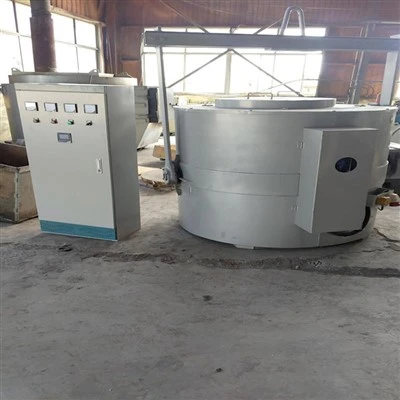
If you’ve ever stepped into a metalworking shop, you know the quenching furnace is the unsung hero of hardening steel. But if you’ve worked with our team here, you’ve probably heard us talk about something that catches new operators off guard: over-heating the load before quenching. A lot of folks assume quenching means heating metal to its critical temperature and immediately plunging it into water, oil, or polymer. That’s the basics, but anyone who’s been in this business more than a year will tell you that over-heating in a quenching furnace isn’t a mistake—it’s a deliberate, calculated step with a specific purpose. Today, I want to break down that purpose, why it matters for your parts, and why as a quenching furnace supplier, we design every one of our units to support this exact process correctly. Quenching Furnace
Let’s start with the basics of steel microstructure, because that’s where all this makes sense. Steel is an alloy of iron and carbon, right? But its properties—hardness, toughness, wear resistance, even how it stands up to impact—all depend on how its atoms arrange themselves when it cools. When steel is heated, it goes through distinct phase transformations. At lower temperatures, it’s in a structure called ferrite, which is soft and ductile. When it hits its critical temperature (usually between 723°C and 912°C, depending on carbon content), it turns into austenite. Austenite is the structure we want for quenching, because it can dissolve carbon evenly, and when cooled fast enough, it transforms into martensite—the hard, strong structure that makes steel useful for everything from gears to axles.
Here’s where over-heating comes in. For most parts, the critical temperature is the minimum we need to reach austenite. But over-heating means raising that temperature 50°C to 150°C above that critical point, holding it there, before quenching. A few years back, I had a customer who made small gear components for farm equipment. They were running their furnace at exactly the critical temperature, and their gears were cracking during the final assembly process. They brought their parts to our shop to test, and after analyzing their microstructure, we saw the problem: uneven austenite formation. At the minimum critical temperature, some areas of the thin gear teeth were just barely turning to austenite, while other thicker sections were still ferrite. When they quenched, those uneven areas transformed unevenly—some martensite, some softer ferrite—creating internal stress that led to cracks. Once we adjusted their cycle to over-heat, hold, and then quench, the cracking stopped. That’s not a gimmick—it’s a fix that comes down to microstructural uniformity.
Let’s get into that uniformity a little more. When steel is heated, carbon atoms don’t move instantaneously. If you just hit the critical temperature, there’s often carbon-rich areas and carbon-poor areas scattered through the austenite. Over-heating speeds up atomic diffusion. At higher temperatures, atoms move much faster, so carbon spreads evenly throughout the austenite structure. That uniform austenite means uniform martensite when quenched. Uniform martensite isn’t just harder—it’s stronger, and it has more consistent toughness. Think about a gear that works 12 hours a day in a dusty field. If one tooth is softer than the others, it’ll wear down fast, and the whole gear will fail. Over-heating eliminates that inconsistency, which is why industries like automotive and heavy machinery have used this step for decades.
Another big purpose of over-heating is refining the grain structure. Wait, I know some folks think heating metal makes grains bigger, which is bad, and that’s true—if you over-heat too much. But controlled over-heating? It refines grains. Let me explain: when you heat steel, the grains of the austenite structure start to grow. But up to a certain temperature, smaller grains actually transform into larger ones? No, wait—no, hold that thought. When you hold at the critical temperature, the grains start to form, but if you go a little above that, you actually trigger the dissolution of any cementite (that’s the iron carbide in steel) that’s left in the structure. Cementite can act as sites for grain growth, so once you dissolve it, you can actually control grain size better. Wait, let me correct that to make sure I get it right. A common issue with low-carbon steels is that when you heat them to the critical temperature, some coarse grains form, which can lead to brittleness when quenched. Controlled over-heating above the critical temperature promotes what’s called “grain boundary migration” that breaks up those coarse grains into finer, more uniform ones. Finer grains mean tougher steel—toughness is the ability to absorb impact without breaking, which is non-negotiable for parts like axles or hydraulic rods that take sudden loads.
I saw this firsthand a few years ago with a customer in the aerospace parts industry. They were making small titanium fasteners for aircraft, and their fasteners were failing stress tests because of coarse grain structure. Titanium, like steel, responds to heat treatment, and their initial process was heating to just the transformation temperature, resulting in coarse grains. We adjusted their quenching furnace cycle to over-heat by 100°C, and their grain size tests showed a 30% reduction in grain diameter. The fasteners passed all their stress and fatigue tests, and they’ve been using our furnaces ever since for that exact process. That’s when I realized over-heating isn’t just for steel—it’s a step that’s applicable across a range of alloys, and it’s a feature we build into every quenching furnace we design.
Wait, but let’s be honest—there’s a fine line here. Over-heating too much, or holding it too long, causes problems. If you go above 1100°C for most medium-carbon steels, grains start to grow uncontrollably, and the steel becomes brittle. That’s called “over-burning,” and it’s a serious issue that can ruin an entire load of parts. As a quenching furnace supplier, our job is to help our customers walk that line perfectly. That’s why our furnaces have precise temperature control, down to ±5°C, and our technical team works with every customer to develop their exact over-heat cycle based on their material, part geometry, and application. We don’t sell one-size-fits-all furnaces—we design units that let operators adjust over-heat temperature, hold time, and quench speed with accuracy, so they get the benefits without the risk.
Another purpose of over-heating is improving hardenability. Hardenability is a material’s ability to harden throughout its cross-section, not just on the surface. If you have a thick part, like a 4-inch gear shaft, quenching the surface might be fast enough to form martensite, but the center might cool too slow and form softer ferrite or pearlite. Over-heating boosts hardenability by making the austenite more stable. Stable austenite is less likely to transform into softer structures when cooling, so it can harden all the way through even thick parts. That’s a game-changer for customers making large components, because it means they don’t have to sacrifice strength in the core for hardness on the surface.
I had a steel mill customer test this last year. They were making large 10-inch diameter shafts for wind turbine gearboxes. Their initial process used oil quenching, but the center of the shafts was only 35 HRC (hardness Rockwell C), while the surface was 52 HRC. They needed the center to be at least 45 HRC to handle the torque from the turbine. We adjusted their quenching furnace to over-heat by 80°C, hold for 2 hours, then quench with a polymer solution that was matched to their new cycle. After testing, their shafts had a uniform 48 HRC all the way through, and they’ve been supplying those shafts to wind farm projects ever since. The over-heat step didn’t just fix their hardness issue—it let them meet a critical industry standard for renewable energy parts.
But here’s the thing: over-heating isn’t a step you can just add to an existing process without modifying your furnace. That’s why when we work with new customers, we start by auditing their current setup. A lot of older furnaces don’t have the precision temperature control, uniform heating, or controlled atmosphere needed for consistent over-heating. If your furnace has hot spots or uneven temperature distribution, over-heating will make those hot spots worse, leading to uneven parts or even distortion. That’s why we design our quenching furnaces with recirculating atmosphere systems, so every part in the load heats evenly, no matter where it’s placed. We use high-quality heating elements and insulated chambers to maintain stable temperatures, even during long hold times at over-heat levels.
Let’s also talk about distortion, which is a huge pain point for manufacturers. When parts warp during quenching, you have to spend time machining them back to shape, which adds cost and time. Over-heating can actually reduce distortion if done correctly. How? Because uniform microstructure means uniform transformation during quenching. If all areas of the part transform at the same rate, they expand and contract at the same time, reducing internal stress that causes warping. We had a customer making valve bodies for the oil and gas industry—they were seeing a 12% rejection rate due to distortion after quenching. After implementing our over-heat cycle in our quenching furnace, their rejection rate dropped to under 2% in the first month. That’s real cost savings, right there.
Of course, I get it—adding an over-heat step means more time in the furnace, which can increase energy costs. But let’s do the math. If you’re rejecting 10% of your load, that’s 10% wasted material, plus the labor and time you spent machining or inspecting those parts. That’s way more expensive than the extra energy used for over-heating. Plus, modern quenching furnaces are energy-efficient—our models use variable power controls and insulated chambers that cut energy use by 20-30% compared to older units. So the extra cost of over-heating is negligible compared to the savings from fewer rejects, longer part life, and less downtime.
Now, I want to make sure this isn’t just a sales pitch (well, okay, it is a little, but it’s based on what we’ve seen work for hundreds of customers). The key takeaway here is that over-heating in a quenching furnace is not a mistake—it’s a controlled, intentional step that delivers better microstructure, uniform hardness, finer grains, improved hardenability, and less distortion. It’s not for every part—some small, thin parts that need only surface hardening might not need it, but for most high-stress, high-wear parts, it’s a critical part of the heat treatment process.
If you’re struggling with part failures, inconsistent hardness, high rejection rates, or just want to upgrade your heat treatment process, I’d encourage you to reach out. As a quenching furnace supplier, we don’t just sell equipment—we work with you to design the exact cycle and furnace setup that fits your specific parts and applications. We’ve helped customers in automotive, aerospace, renewable energy, heavy machinery, and oil and gas get better results by optimizing their over-heat steps, and we can help you too.
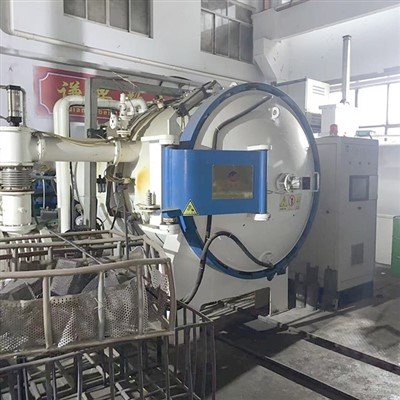
Don’t leave your heat treatment to guesswork. The quenching furnace is only as good as the process you run in it, and over-heating is a powerful tool when used correctly. Let’s talk about your needs, and figure out how we can help you get the most out of your parts and your production. If you’re ready to learn more or request a test of your parts, reach out to our team to connect on procurement and process optimization. We’re here to help you solve problems, not just sell furnaces.
Well Furnace References
ASM International. (2020). Heat Treater’s Guide: Practices and Procedures for Irons and Steels. ASM International.
Krauss, G. (2015). Steels: Processing, Structure, and Performance. ASM International.
Tarasov, B. P., & Shteyngart, M. E. (2018). Quenching Theory and Technology. CRC Press.
Danyang Dingfeng Industrial Furnace Co., Ltd.
Danyang Dingfeng Industrial Furnace Co., Ltd. is one of the most experienced quenching furnace manufacturers and suppliers in China, also supports customized service with low price. Please feel free to wholesale high quality quenching furnace made in China here from our factory. For pricelist, contact us now.
Address: Lizhuang Economic Development Zone, Danyang City
E-mail: saleszk@dffurnace.com
WebSite: https://www.dffurnace.com/
