Hey there, I’m Jake, and I’ve been selling PVG conveyor belts for over a decade—so I get it. When a mine operator, construction manager, or bulk material handler calls me and says, “We need to move 12,000 tons of gravel per hour,” the first question out of my mouth isn’t just, “How fast is your belt running?” It’s, “What’s the maximum load per unit length of PVG belt you can actually handle without blowing out your splice or tearing the core?” Because that’s the stuff that keeps your operation from shutting down mid-shift. Let’s break this down like we’re chatting over a coffee at a trade show, no boring textbook jargon unless it’s necessary. PVG Conveyor Belt
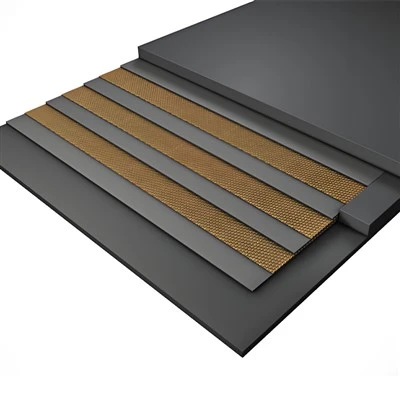
First off, let’s get one thing straight: PVG isn’t that old rubber conveyor belt you see at the grocery store checkout. PVG stands for Polyester Vulcanized Rubber, and it’s the workhorse for heavy-duty applications—think underground mines, quarries, port terminals, and even power plants hauling coal. The core is multiple layers of polyester fabric, sandwiched between thick rubber covers, and vulcanized (that’s a fancy word for chemically fused) so it’s way stronger and more resistant to stretching than regular PVC belts. That strength is what makes people ask about maximum load per unit length.
Wait, what’s “load per unit length” exactly? For those who don’t geeker out on conveyor specs like I do, load per unit length is how much weight is sitting on every meter or foot of the belt at any given time. It’s not just total tons per hour—because if your belt is moving at 2 m/s vs 5 m/s, you can have more or less weight per meter to hit the same hourly total. Like, if you’re moving candy at 10 m/s, you can have a tiny load per meter, but move coal at 1 m/s, you need way more material under each meter of belt to hit the same output. Got it? Good, that’s the basics out of the way.
Now, the big question: what’s the actual maximum load per unit length for a PVG belt? The short answer is, it depends—but let’s give you real numbers I’ve seen in the field, not just the vague specs manufacturers put in brochures. For most standard PVG belts, we’re talking anywhere from 15 kg/m up to 150 kg/m. Wait, hold on—don’t zone out yet. That’s a huge range, right? A 600 mm wide PVG belt for light quarry duty might cap out around 25 kg/m, but a 1800 mm wide belt for underground copper mining? We’ve had clients pushing 140 kg/m and it didn’t blow a splice. But here’s the catch—you can’t just cram as much as possible. I’ve seen guys load 160 kg/m on a 1800 mm belt, and they tore the core three weeks later. Not because the belt was bad, but because they skipped the fine print.
Let’s talk about what determines that max load, because this is where I can help you the most. First up: belt width. That’s the biggest one. A 500 mm wide belt can’t hold as much per meter as a 2000 mm wide belt, duh. We’ve got a rule of thumb here: for every 100 mm of belt width, your max load per meter goes up roughly 8-10 kg/m. So a 700 mm belt is around 50 kg/m max, a 1200 mm is 100-120 kg/m, and so on. But that’s just a starting point. Next thing: the tensile strength of the belt. PVG belts have a rating in kN/m—like, a 1000 kN/m PVG is way different from a 2000 kN/m. Higher tensile strength means more layers of polyester fabric, so it can handle more tension, which ties directly to how much weight you can pile on per meter. I always tell my clients: don’t buy a 1000 kN/m belt because it’s cheaper. If you’re planning on pushing 120 kg/m, you need at least a 1500 kN/m belt minimum. Otherwise, when the belt stretches, that’s when the splices fail.
Then there’s the material you’re hauling. Duh, if you’re moving something super dense like iron ore, you can’t pile it as high or as thick as you would with fluffy wheat or sawdust. Iron ore is like 3.5 tons per cubic meter, so a 1800 mm belt carrying iron ore might hit max load at 120 kg/m, but if it’s limestone (2.7 tons/m³), you can push to 130 kg/m. If it’s wood chips? You can hit 150 kg/m on that same belt. The cover rubber matters too—abrasive materials wear the cover down faster if you’re running too much load, so if you’re hauling rock, you need a thicker cover (12 mm vs 6 mm) which cuts down a little on load capacity because the cover adds its own weight. Wait, right—we have to count the belt’s own weight too, but when we talk about load per unit length, that’s the material load, not the belt itself. Important distinction.
Wait, let’s not forget the operating conditions. Are you running the belt up a steep incline? If you’re climbing 15 degrees or more, you need to make sure the material doesn’t slide, so you use idlers that cradle the belt and keep the load from spilling, but that also means the bulk density distribution is different. If you’re running at 1 m/s vs 5 m/s, higher speed means less contact time per meter, so you can have more load per meter without straining the belt? No, wait—actually, at higher speeds, the tension is higher, so you can’t push as much load per meter because the belt is under more stress. I learned that the hard way early on. I had a mine client that wanted to run their 1500 mm belt at 6 m/s with 140 kg/m load—we tried it, the belt snapped at the splice in two days. Switched to 4 m/s, same belt, same load, and they’ve run it for three years no issues. That’s the kind of on-the-ground experience you don’t get from a spec sheet.
Another thing people miss: the idler spacing. If your idlers are every 1.5 meters vs every 1 meter, the load is distributed over a longer section, so you can have more load per meter. If idlers are too far apart, the belt sags under the weight, which causes more stress on the core, and that sag eventually leads to tears. I always recommend idler spacing no more than 1.2 meters for heavy loads. If you go wider than that, you’re asking for trouble, even with a top-tier PVG belt.
Let’s get real, though—manufacturers will give you a theoretical max load, but that’s in a perfect lab setting, not your mine that’s dusty, runs 24/7, and has a few bumps in the conveyor line. I once had a client come to me saying his PVG belt was rated for 140 kg/m, but he was running 150 kg/m and it worked fine for a year. Turned out he was carrying limestone, not iron ore, and his idlers were spaced 1 meter apart, not 1.5. So that extra 10 kg/m he thought was pushing it? Was actually totally safe for his setup. That’s why generic numbers are useless—you need to tailor it to your specific application.
So let’s talk about what happens when you exceed the max load per unit length. It’s not just a little stretch. First, you get excessive belt elongation—PVG belts should only stretch about 2% max, if you push too hard, you hit 5% or more, and that makes the belt slip on the pulleys, which wears the rubber cover down faster. Then, splice failure. Splice strength is super important for PVG belts—most good splices are 90% of the belt’s tensile strength, but if the belt is carrying too much load, the splice takes the brunt of it. I’ve seen mines have a splice fail underground, and they’re down for 12 hours trying to replace it—costs them tens of thousands of dollars per hour. That’s way more than saving a few bucks by cramming extra material on the belt. Also, you get belt tearing. If the load is uneven, or you have sharp rocks digging into the belt, too much weight per meter means the core can’t handle the puncture, and you get a tear that runs the entire length of the belt. Repairing a PVG belt tear is possible, but it’s expensive and takes days to do right.
Now, as a PVG belt supplier, how do I help you nail the right max load for your operation? I don’t just hand you a spec sheet. First, I ask all the annoying questions: what’s the material being hauled, its bulk density, the belt width you’re using or planning to use, conveyor speed, incline angle, idler spacing, and how many hours a day you run it. Then I cross-reference that with the belt’s tensile strength rating. For example, if you’re a quarry with a 1200 mm wide belt, moving gravel at 3 m/s, idler spacing 1 meter, incline 10 degrees, the max load per unit length is around 105 kg/m. I’d recommend a 1500 kN/m PVG belt for that, and that’s non-negotiable. If you try to use a 1000 kN/m belt, you’re going to have issues. We also do on-site assessments sometimes—if you’re not sure, we send a tech out to measure your current setup, check the belt wear, and adjust the load so you’re not overloading.
Wait, let’s clear up a common myth: people think PVG is only for heavy loads. No, we make lightweight PVG belts for smaller operations too—like, 500 mm wide, max load 20 kg/m, for small construction sites moving sand. That’s still PVG, but tailored for lighter duty. So max load isn’t just a big number for big belts, it’s for every PVG application.
Another thing to consider: future expansion. If you’re planning on ramping up production in a year or two, don’t size your belt for current load. Size it for what you want to be hauling. I had a small sand company that bought a 1200 mm belt rated for 80 kg/m in 2021. By 2023, they were moving twice as much, and they couldn’t just add load per meter—they had to upgrade their belt to 1800 mm. Cost them way more than if they’d bought the bigger belt in the first place. That’s a mistake I see all the time.
Now, let’s get back to that initial question: what’s the maximum load per unit length of a PVG conveyor belt? If I had to sum it up in one sentence, it’s: it ranges from 15 kg/m (for narrow, light-duty PVG belts) up to around 150 kg/m (for wide, heavy-duty PVG belts in optimal conditions), but that’s never a hard limit—you have to adjust for material, speed, idler spacing, and operating hours. And as someone who’s been in this game for years, I can tell you that the best operations run 10-15% below that max load, just to have a buffer. Because things happen—dust builds up, material bulk density varies, idlers wear out, and you don’t want to be pushing your belt to the edge every single day.
I’ve had clients say to me, “Why not push it to the max? We need every ton we can move.” And I get it, production is everything. But I’ve also seen clients lose $50,000 in downtime because they crammed 5 kg/m too much on their belt, tore the core, and had to replace it overnight. That’s way more costly than the extra 5% of production they were trying to get. Buffers are your friend here.
So if you’re in the market for a PVG belt, or you’re looking to upgrade your current one, or you’re just trying to figure out if you’re overloading your existing belt, hit me up. I don’t do hard sells—I do honest advice, because my business depends on your long-term success. I’ll ask you the right questions, send you the right specs, and make sure you get a PVG belt that’s sized correctly for your max load per unit length, no guesswork, no vague numbers, no hidden fine print. We’ve got belts for every application, from small construction to large underground mines, and I’ll make sure you get exactly what you need without wasting money on overkill or underpowered gear.
Wait, just to make sure I didn’t miss anything—what about splice type? Oh right, the splice affects the max load too. A finger splice is good, but a step splice is stronger for heavier loads. If you’re pushing 120+ kg/m, you need a properly made step splice, not a quick finger splice. That’s another thing I always bring up with clients—even the best belt is useless if the splice is bad. So when we talk about max load, the splice strength is part of that equation too.
Yeah, that’s the stuff that makes this job worth it. Not just selling a belt, but helping someone avoid a costly shutdown. If you’ve got questions about PVG belt load, sizing, or anything else, reach out anytime. I’m here to help you move your materials safely, efficiently, and without all the headaches.
Low Rolling Resistant Conveyor Belt References:
- Conveyor Equipment Manufacturers Association (CEMA). (2021). Belt Conveyors for Bulk Materials, 7th Edition.
- Rubber Manufacturers Association (RMA). (2020). Specification for Polyester Vulcanized Rubber (PVG) Conveyor Belts.
- International Organization for Standardization (ISO). (2019). ISO 10247: Conveyor Belts – Polyester Vulcanized Rubber (PVG) Type – Specifications.
- Mine Safety and Health Administration (MSHA). (2022). Guidelines for Conveyor Belt Load Capacity in Underground Mining Operations.
Alumina Technology (Qingdao) New Materials Co., Ltd.
As one of the most professional pvg conveyor belt manufacturers and suppliers in China, we also support customized service. With abundant experience, we warmly welcome you to buy pvg conveyor belt for sale here and get quotation from our factory. For price consultation, contact us.
Address: No.448, Jiangshan South Road, Huangdao District, Qingdao City, Shandong Province
E-mail: Gloria.zhang@contitech.cn
WebSite: https://www.altechconveyorbelt.com/
