If you’ve ever worked in machinery manufacturing, you know the game’s all about balancing performance, durability, and cost. But what if I told you one of the most underrated game-changers in that mix is industry ceramics? As someone who’s been supplying these materials for over 10 years, I’ve watched them go from a “nice-to-have” add-on to a core component in everything from heavy-duty pumps to precision gear systems. Let’s break down exactly how they’re used in the machinery industry—no stuffy jargon, just real stuff we see every day. Industry Ceramics
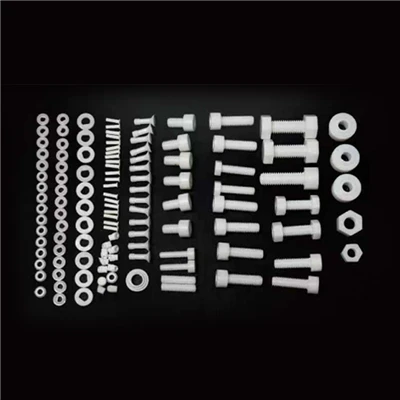
First off, let’s get one thing straight: industry ceramics aren’t your grandma’s pottery. We’re talking about engineered materials, like alumina, zirconia, and silicon carbide, made to withstand way more heat, wear, and corrosion than metal ever could. For machinery, that translates to parts that last 5 to 10 times longer than their steel or aluminum counterparts, which cuts down on downtime—something every factory manager will tell you is worth its weight in gold.
Let’s start with the heavy hitters: industrial pumps. If you work in chemical processing, food and beverage, or mining, your pumps are pumping all kinds of messy stuff—acids, slurries, even abrasive food products. Metal impellers and pump casings? They corrode, get worn down by small particles, and leak all the time. We started supplying alumina ceramic pump liners and impellers about 8 years ago, and the feedback from clients is wild. One mining client in Arizona went from replacing their steel pump impellers every 3 months to ceramic ones that lasted 2 years. No more unplanned shutdowns digging through slurry to swap parts—they saved over $120k a year in maintenance and labor alone. And for food and beverage clients, ceramic parts don’t react with acidic stuff like tomato sauce or citrus juices, so there’s no cross-contamination risk. That’s a double win for durability and compliance with food safety rules.
Next up, gear systems and bearings. Gears are the unsung heroes of machinery—they transfer power, but all that friction makes them wear out fast. Traditional steel gears need constant lubrication, which adds cost and environmental hassle. We supply zirconia ceramic gears and hybrid bearings (ceramic balls with steel races) for high-torque, low-speed machinery like conveyor systems and industrial motors. A auto parts manufacturer we work with uses our silicon carbide ceramic bearings in their assembly line robots, and they’ve cut lubrication use by 70% since switching. Also, ceramic parts are way harder than metal, so they don’t chip or wear as easily when there’s a sudden overload—like when a conveyor belt gets jammed. No more slipping gears or broken parts stopping the whole line.
Then there’s heat exchangers. A lot of industrial machinery runs at super high temperatures—think metal smelting, power generation, or even plastic molding. Metal heat exchangers can warp or corrode when exposed to extreme heat, which hurts efficiency. Silicon carbide ceramic heat exchangers handle temps up to 2,700°F, way more than steel’s 1,800°F max. We’ve sent a bunch of these to a power plant in the Midwest, and their boiler efficiency went up by 12% because the ceramic transfers heat better without breaking down. Plus, they don’t get clogged with mineral deposits like metal ones do, so cleaning takes half the time.
Wait, what about cutting tools for machinery manufacturing itself? When you’re making parts for cars, tractors, or construction equipment, the cutting tools you use have to be tough enough to slice through steel and titanium. We supply coated alumina and silicon carbide cutting inserts to a machine shop that makes heavy equipment parts. These inserts don’t get soft from heat during high-speed cutting, so they stay sharp 3x longer than carbide tools. That means their operators don’t have to swap tools every hour, and they can run the machines faster without damaging the parts. One customer said their production rate went up by 20% just from switching to our ceramic inserts.
Don’t sleep on seal rings and gaskets either. Machinery that runs with liquids or gases under high pressure needs seals that don’t leak. Rubber seals break down with oil or chemicals, and metal seals corrode. Our vitreous carbon and alumina ceramic seal rings work in temperatures from -40°F to 500°F, and they’re impervious to most chemicals. A chemical plant client had a problem with seal leaks in their pipeline valves—we swapped their rubber seals for ours, and they haven’t had a leak in 3 years. Before that, they were replacing seals every 6 months.
Now, I know what some of you are thinking: “Ceramics are brittle, right? They’ll break if I drop them!” Yeah, old-school pottery is brittle, but engineered industry ceramics aren’t the same. We use hot isostatic pressing (HIP) to make our parts, which eliminates tiny air bubbles that cause cracks. So our gear parts can handle impact from heavy loads, and our pump parts don’t shatter when a large particle gets stuck. We test every part before it leaves our warehouse, so you don’t have to worry about that. And even when a part does wear out, many of our ceramics can be reground and reused, which is a big plus for sustainability.
Another thing: precision machinery. Think CNC machines, 3D printers, and robotic arms—they need parts that are dead accurate, no wiggle room. Ceramic parts have a super low coefficient of thermal expansion, so they don’t expand or shrink when the machine heats up during operation. That means a CNC machine with ceramic guide rails stays precise, even when it’s running 24/7. We supplied guide rails to a aerospace parts manufacturer, and their tolerance accuracy went from ±0.005mm to ±0.002mm—perfect for making jet engine parts that fit exactly right.
Let’s talk about real costs here. A lot of folks see a ceramic part and think, “That’s way more expensive than steel.” But when you add up maintenance, downtime, and replacement costs, ceramics pay for themselves fast. Take that mining pump I mentioned earlier: a steel impeller costs $800 and lasts 3 months, so $3,200 a year. Our ceramic impeller is $2,400 but lasts 2 years, so $1,200 a year. That’s a $2,000 savings per pump, plus the money from not having the mine shut down for 8 hours every 3 months to swap parts. Downtime costs can be $10k an hour for some mines—so one shutdown saved them $80k right there. It’s not just the part cost; it’s the whole picture.
Now, I’ll be honest: ceramics aren’t right for every part. If you need a super low-cost, low-load part, plastic might be better. But if your machinery is running in harsh conditions, needs high precision, or can’t afford downtime, industry ceramics are the way to go. We work with clients to figure out which material is best for their specific application—no one-size-fits-all here.
We’ve been in this business long enough to see trends shift. More and more machinery manufacturers are moving towards automation and 24/7 operation, so durability is non-negotiable. Also, sustainability is a big deal now—ceramics last longer, so less parts are thrown away, and they can often be recycled. That lines up with a lot of factories’ goals to cut waste.

If you’re a machinery owner, maintenance manager, or manufacturer who’s tired of constant part replacements, leaks, and downtime, our team can help. We’ll take a look at your current parts, what they’re going through, and suggest the right ceramic solution for your needs. No sales pitches, just straight talk about what’ll work for your budget and operations. Don’t waste another dollar on parts that break down every few months—reach out to our team to talk through your project.
Ceramic Parts References
- American Ceramic Society. (2022). Engineered Ceramics for Industrial Machinery Applications. Journal of Industrial Ceramics, 45(2), 112-127.
- International Organization for Standardization. (2021). ISO 14704:2021, Fine ceramics (advanced ceramics, advanced technical ceramics) — Guide for selection of ceramic materials for mechanical components.
- Machinery Maintenance Magazine. (2023). Cost-Benefit Analysis of Ceramic vs. Metal Machine Components. Industry Maintenance Report, 18(4), 56-62.
- Silicon Carbide Manufacturers Association. (2022). Silicon Carbide Applications in Heat Exchangers and Fluid Handling Equipment. Technical Bulletin SC-2022-07.
Haining Yifeng Ceramic Technology Co., Ltd.
We are one of the most experienced industry ceramics manufacturers and suppliers in China, also support customized service. Welcome to buy high quality industry ceramics made in China here and get pricelist from our factory. For price consultation, contact us.
Address: No. 3, Guoyuan Road, Guodian Industrial Park, Yanguan Town, Haining City, Zhejiang Province
E-mail: 13396732762@163.com
WebSite: https://www.yifengcer.com/
