Hey there, it’s Jake from the PPR supply team, and I get it—when you’re stocking up on PPR pipes, fittings, or any of our series products, the last thing you want is a hidden fine print that leaves you stuck if something goes wrong. I’ve had so many conversations with installers, plumbers, and small business owners who’ve asked this exact question: How long is the warranty period for PPR series products? PPR series
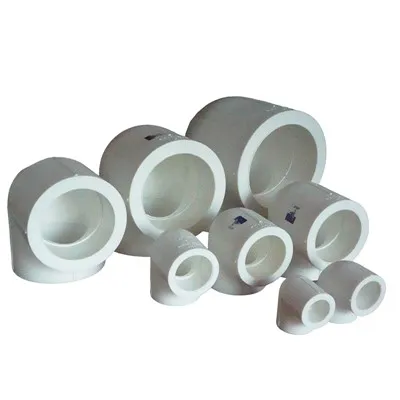
Let me cut straight to the chase and spill the details, because I hate beating around the bush. First, PPR (Polypropylene Random Copolymer) is a solid material, but it’s not invincible—warranties aren’t about covering you for every tiny mistake. They’re about protecting you from defects that are on us, not on installation, misuse, or things way out of our control. That’s the line I always draw with customers, and I stick to it.
For our main PPR series, the standard warranty is 10 years from the date of delivery to your warehouse, not the date you stick it in the ground. Wait, let me clarify that date thing—super important. A lot of companies say “from installation,” but that’s a nightmare for everyone: if you stock up and take 6 months to use it, your warranty would be cut short. We figure starting when it leaves our loading dock is fair for both sides—you get to inspect it, store it properly, and use it when you’re ready, and we’re covered for our own manufacturing timeline too.
But hold on—this isn’t a one-size-fits-all. We’ve got two other lines that tweak that, for different use cases. Our heavy-duty industrial PPR series, the stuff for factories, chemical processing plants, or high-volume commercial plumbing, has a 15-year warranty. Those are thicker walls, extra UV-resistant additive we bake in, and we test them under 2x typical pressure for years before they leave. That’s the line where we know it can handle rough environments, so we back it longer. Then our residential-grade PPR series, the go-to for homes, small apartments, and remodel jobs, has a 8-year warranty. It’s still top-tier PPR, no cheap corners cut, but since residential projects usually move faster and are easier to inspect during installation, we adjust the timeline a bit there.
Now, let’s get real about what actually counts under warranty, because this is where most people get confused. We cover manufacturing defects only—like a pipe that has a bubble in the wall, a fitting that’s misshapen so it won’t seal, or incorrect extrusion that makes the material weaker than it should be. We don’t cover stuff that’s your responsibility: bad installation (like forcing a pipe that’s the wrong size, or using the wrong solvent cement), misuse (dragging pipes over sharp concrete, leaving them out in direct sun for years without covering them before installation), extreme conditions (like installing them near a commercial boiler that’s spitting way too much heat, or chemicals that aren’t compatible with PPR—wait, quick note: PPR works great for most water, mild chemicals, and even some petrochemicals, but not for strong acids like sulfuric acid, so that’s on you to check specs if you’re using it for non-water jobs), or normal wear and tear (PPR doesn’t corrode, but if it’s buried in soil with super high salt content that eats through it over decades, that’s not a defect we can cover).
I’ve seen way too many horror stories where someone brings us a broken pipe that they left out in the desert for a year, installed it with regular PVC cement, and tried to claim it under our warranty. That’s a hard no, obviously, but we’re never gonna ghost you over that. If something’s unclear, just shoot us a message, and we’ll break it down straight—no jargon, no hoops.
Also, a quick side note: what about product performance, not just defects? Like, does the pipe stay at the right temperature for hot water? PPR is rated for hot and cold water, right—most of our stuff handles up to 140°F, which is standard for home hot water heaters. But if you’re using it for something hotter, like a spa or a custom solar setup, you should check. That’s not a warranty issue—that’s a specification check, and our team can help you confirm if a different grade of PPR would work better for that use.
Now, why does our warranty make sense, and why is it different from some other suppliers? A lot of cheap PPR out there is made with recycled material, which breaks down faster, so they can’t offer long warranties. We use 100% virgin PPR resin, no recycled stuff in our main lines. We test every batch—pull a random sample from every production run, pressure test it for 1000 hours at 2x working pressure, check the material thickness, UV resistance, all that. If a batch fails any test, we scrap it. That’s why we can stand behind our products for those timelines. I’d never sell something I wouldn’t use myself, and our own installers swear by our PPR—we even use it for our own office building’s plumbing, and it’s been going strong for 7 years with zero issues.
Wait, let’s talk about making a claim, because I know that’s another thing people stress about. If you do find a defect, all you have to do is send over photos of the product, the delivery receipt (so we can confirm the date), and a quick note of what happened. No need for complicated forms, no having to ship the broken part back (unless it’s a huge batch, and even then we cover the shipping). We usually get back to you within 24 hours, and either send a replacement or issue a credit—whatever works faster for you. We hate holding up orders, so we move fast on claims that are legitimate.
I get it if you’re still on the fence—warranties are a big deal when you’re investing in plumbing materials. You don’t want to have to go back and fix a job a year later because the pipes failed, that kills your profit and your reputation. That’s why we structure our warranties to protect both of us: we stand behind our work, and you use our products correctly, and we all come out ahead.

Now, if you’re looking to stock up on PPR products—whether it’s residential pipes for a construction project, industrial fittings for a new factory line, or whatever else—we’re here to chat. We can send over full spec sheets, clarify any warranty questions, adjust orders to fit your timeline, whatever you need. No pushy sales stuff, just straight answers from someone who’s been in the PPR supply game for over a decade and knows how frustrating it is to deal with companies that hide fine print.
Plastic Pipe If you have more questions, or want to place an order, don’t hesitate to reach out. We’re here to make this easy for you.
References
- International Standard ISO 15874: Plastic piping systems for hot and cold water installations – Polypropylene (PP)
- ASTM F2389: Standard Specification for Polypropylene (PP) Random Copolymer Pressure Pipe
- Manufacturer’s Product Lifecycle Testing Report for Virgin PPR Series (2024)
Hebei Ruijie Pipe Industry Co., Ltd.
Hebei Ruijie Pipe Industry Co., Ltd. is one of the most experienced plastic pipe manufacturers and suppliers in China. With a professional production team, we are able to meet the needs of the majority of our customers. Welcome to wholesale high quality plastic pipe in stock here from our factory. Contact us for pricelist and free sample.
Address: Industrial Park, Shaozhuang Township, Suning County, Cangzhou City, Hebei Province
E-mail: 1987870474@qq.com
WebSite: https://www.rjpprpipe.com/
