If you’ve ever walked past a food processing plant, a pharmaceutical lab, or a chemical manufacturing facility, chances are you’ve encountered a plate condenser at work. As a supplier who’s spent the last 12 years helping businesses across industries optimize their separation, cooling, and purification processes, I’ve lost count of how many times customers start a conversation with the same question: “What exactly can a plate condenser do for us?” Plate Condenser
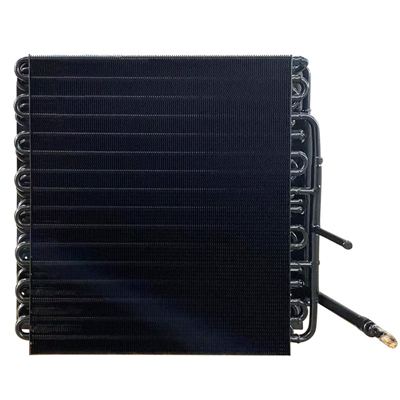
When I first got into this business, I’ll admit I had a narrow view of plate condensers. I thought they were just for the big chemical plants I’d seen in trade shows, handling harsh acids or hot solvents. Over time, though, I’ve worked with small craft breweries, biotech startups, and even makers of specialty perfumes, and I’ve learned that plate condensers are some of the most versatile pieces of process equipment out there. Their application range is far wider than most people realize—and that’s exactly what I want to break down here, based on real projects I’ve supported and the science that makes these units work.
To start, let’s keep things simple: a plate condenser isn’t some mysterious, one-trick device. It’s made up of a stack of thin, corrugated metal plates, usually stainless steel, that are sealed together with gaskets. The gaps between the plates create two separate flow paths: one for the hot vapor or process fluid that needs to be cooled, and another for a cold utility (like water, glycol, or even ambient air) that absorbs the heat. The corrugations increase turbulence, which means heat transfers faster than in old, shell-and-tube condensers. That efficiency is what makes plate condensers such a go-to for so many industries.
Let’s start with the most well-known, but still growing, sector: food and beverage. A couple years back, I worked with a craft distillery in Oregon that was struggling with their old condenser for making small-batch whiskey. They were using a shell-and-tube unit that took three hours to cool their distillate, and half the time they were losing product to waste because the condenser couldn’t handle the varying vapor flow rates from their small 500-gallon still. We installed a compact plate condenser, and they cut their cooling time to 45 minutes, with zero product loss. Why? Plate condensers are perfect for distillation because they can handle the wide range of vapor loads common in small-batch production—you don’t have to slow down your batch process to match the condenser’s limits.
It’s not just distillation, though. Craft breweries use plate condensers for wort cooling, which is a make-or-break step in beer making. After boiling the wort (the sugary liquid that turns into beer), you have to cool it quickly to yeast pitch temperature, usually between 60 and 70 degrees Fahrenheit. If you take too long, bacteria can grow and ruin the batch. A brewer I met in Colorado was using a plate-and-frame heat exchanger (often confused with a condenser) that wasn’t built to handle pressurized vapor, so it leaked. We swapped it for a plate condenser rated for low-pressure steam, and now they cool 10 barrels of wort in 20 minutes, with no leaks. Even large-scale soda manufacturers use plate condensers to cool carbon dioxide after it’s captured during fermentation, recycling the gas back into their bottling lines. It’s a closed-loop system that cuts down on waste, and plate condensers are central to that.
Next up, the pharmaceutical and biotech sector, which is maybe the most demanding when it comes to process equipment. Every part of these facilities has to be sanitary, compliant with FDA regulations, and precise to the tenth of a degree. I worked with a biotech company that was developing a new inhaler medication, which required purifying a raw organic compound via distillation. Their old condenser left trace amounts of residual solvent in the final product, which meant they had to run extra purification steps, adding weeks to their production timeline. We supplied a plate condenser with food-grade EPDM gaskets, polished to a 2RA finish (standard for pharma), and built to operate at a tight 0.1-degree temperature control. After testing, they found the residual solvent levels were down 98%—they didn’t need the extra purification steps at all.
Another project in this space: a vaccine manufacturer that needed to concentrate a viral sample without exposing it to high heat. Plate condensers can handle vacuum distillation, which lowers the boiling point of liquids so you don’t have to heat them as much. That viral sample is sensitive to temperatures above 40 degrees Celsius, and the plate condenser we installed maintained a consistent vacuum pressure, keeping the sample at 35 degrees while concentrating it threefold. It’s applications like this that make plate condensers critical for drug development, not just large-scale production. Even contract manufacturing organizations (CMOs) rely on them for everything from antibiotic purification to creating sterile water for injections.
Moving into specialty chemicals and fine fragrances, this is where I’ve seen the most underrated uses for plate condensers. Fine fragrance makers create scents by distilling essential oils from flowers, herbs, and spices, and every scent depends on preserving delicate aromatic compounds that break down at high temperatures. I worked with a small perfumery in Grasse, France (yes, the actual Grasse), that was losing 20% of their jasmine oil during distillation because their old condenser was too slow and caused hot spots in the distillation column. Plate condensers cool the vapor so evenly that they can capture those fragile compounds before they degrade. Now they run their small-batch jasmine distillations and recover 95% of the oil, which translates to richer, more complex scents for their luxury clients.
In specialty chemicals, we’ve helped manufacturers of lithium-ion battery materials cool solvent vapor during the production of cathode components. Lithium production processes often use highly flammable solvents, so the condenser has to be not just efficient, but explosion-proof. Plate condensers can be built with exotic metals like Hastelloy or titanium, which resist corrosion from aggressive chemicals, and rated for hazardous locations. A couple battery startups I work with now use our plate condensers to recover and reuse their solvents, cutting their raw material costs by 30% and reducing waste by 90%. That’s a win for their bottom line and the planet, something I’m especially proud to be part of.
Let’s not forget industrial water treatment, another area where plate condensers are essential. Power plants, for example, use huge amounts of water for cooling, and they need to condense steam back into water to reuse in their boilers. A coal or natural gas power plant might have a 10,000-square-foot plate condenser (yes, they can be large, not just compact) that cools the turbine exhaust steam. They’re more efficient than shell-and-tube condensers for this application because they require less space and use less cooling water—one plant I worked with cut their water usage by 25% after switching to plate condensers, which helped them avoid strict local water use limits.
Even wastewater treatment plants use plate condensers to capture volatile organic compounds (VOCs) from their sludge digestion processes. Those VOCs can be harmful if released into the air, but a plate condenser can cool the vapor, condense the VOCs, and send them for safe disposal or reuse, while releasing clean air back into the atmosphere. It’s a key part of meeting environmental regulations, and we’ve supplied units to dozens of municipal treatment plants across the U.S. to help them comply with EPA standards.
Now, I know what you’re thinking: “Why would I use a plate condenser instead of another type?” That’s a fair question, and it comes down to process needs. Plate condensers shine when you need high heat transfer efficiency in a compact footprint, precise temperature control, or the ability to handle variable flow rates. They’re not the best fit for every job—for example, condensing very high volumes of steam for a large power plant might still use shell-and-tube, but for most mid-sized to small operations, or applications that require those specific benefits, plate condensers are the way to go.
Over the years, I’ve also learned that customization is key. One size doesn’t fit all, even with plate condensers. I once worked with a seafood processing plant that needed to condense steam from fish cooking to reuse as hot water for cleaning. The steam had traces of oil and protein, so a standard stainless steel plate condenser would have clogged quickly. We modified the plates with wider gaps, used gaskets resistant to food oils, and added a pre-filter to catch the solids before they reached the condenser. That unit has been running for seven years with zero downtime. It’s projects like that that make my job rewarding—we don’t just sell equipment, we solve problems.
If you’re reading this and thinking, “Hey, this sounds like something we could use for our operation,” I want to make this straightforward. Whether you’re a small craft brewery struggling with wort cooling, a biotech company working on a new drug, a chemical manufacturer looking to reduce waste, or any business in between, a plate condenser might be the solution you haven’t considered yet. I’ve spent 12 years in this business, and I’ve seen how the right condenser can change a process—cut costs, improve product quality, reduce downtime, and even help a business meet sustainability goals.
We don’t believe in one-size-fits-all here. We’ll take the time to learn about your specific process, your flow rates, your temperature needs, and any materials you’re working with, then recommend a plate condenser that fits exactly what you need. No pushy sales pitches, no generic solutions. We know that when a piece of equipment works well, it keeps your operation running smoothly, and that’s what matters most to us.
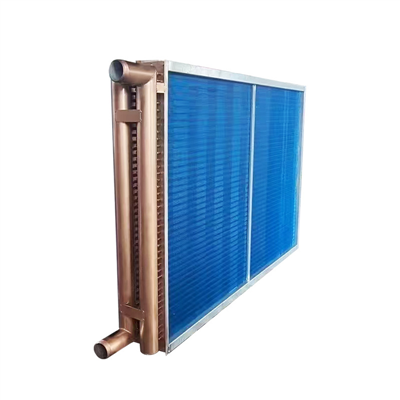
If you’re ready to talk about how a plate condenser could benefit your business, or just have questions about whether it’s the right fit, we’re here to chat. No obligation, no jargon, just straight answers about your process and how we can help.
Finned Tube References
- Sherwood, T. K., & Pigford, R. L. (1952). Absorption and Extraction. McGraw-Hill Book Company.
- Kern, D. Q. (1950). Process Heat Transfer. McGraw-Hill Book Company.
- ASME Bioprocessing Equipment Standard (BPE-2022). American Society of Mechanical Engineers.
- U.S. Environmental Protection Agency (EPA). (2021). Volatile Organic Compounds Control Technologies for Wastewater Treatment.
- Smith, J. M., Van Ness, H. C., & Abbott, M. M. (2005). Introduction to Chemical Engineering Thermodynamics. McGraw-Hill Book Company.
Xiangshui Derkang Refrigeration Equipment Co., Ltd.
Address: No. 2, Xiaojian Town Entrepreneurship Park, Xiangshui County
E-mail: 505745223@qq.com
WebSite: https://www.xsderk.com/
