If you’ve ever stood at the edge of a stone quarry, watching massive machines carve through bedrock with a roar that rumbles in your chest, you know these aren’t just pieces of industrial equipment—they’re workhorses built to outpace the harshest conditions. But after years of repairing, supplying, and troubleshooting quarry machinery, I can tell you one thing: even the toughest machines have their breaking points. The parts that take the most abuse aren’t the shiny, expensive assemblies you see at trade shows; they’re the unassuming, often overlooked components that wear down day after day, shift after shift. As a stone quarry machine supplier, I’ve spent thousands of hours walking quarry floors, listening to operators’ complaints, and testing parts in real-world conditions to understand exactly what fails, why, and how to make it last longer. Today, I’m breaking down the key wear-and-tear parts of quarry machines, sharing what I’ve learned from decades in the business, and explaining why partnering with the right supplier for these parts can make or break your operation’s uptime. Stone Quarry Machine

First, let’s get clear on what “wear and tear” means here. Quarry machines don’t work in controlled factories—they operate in dust, mud, extreme temperatures, and with materials that are harder than most engineered metals. A part’s lifespan here depends not just on the material it’s made of, but on how often it’s exposed to impact, abrasion, and contamination. Let’s start with the most ubiquitous part: the jaw crusher’s jaw plates. Jaw crushers are the workhorses of any quarry, tasked with reducing raw blasted rock into manageable sizes for further processing. Their jaw plates are the liners on the fixed and moving jaws that actually grip and crush the rock. Without them, the steel jaws would be worn away in weeks, not years. But even these liners take a beating. The rock isn’t smooth—it’s sharp, angular, and full of silica, a mineral that’s twice as abrasive as granite. Over time, the constant grinding of rock against the jaw plates erodes their surface, creating uneven gaps that reduce crushing efficiency. Worse, when large boulders or uncrushable debris (like broken drill bits or rock bolts) get caught in the jaws, the plates take a sharp impact that can crack or chip them. I’ve seen quarry operators ignore worn jaw plates to save a few bucks, only to have the crusher shut down for three days while they replace the entire assembly—costing far more than the savings on cheap liners. That’s why I always recommend high-chromium white iron jaw plates, not the generic cast steel ones you can find at big-box industrial stores. The chromium gives the plate’s surface extra hardness, resisting abrasion, and the proper profile (like a deep “tooth” design) helps distribute impact force to reduce chipping.
Next up, cone crusher mantles and bowl liners. If jaw crushers are the first step, cone crushers are the workhorses that fine-tune the stone to the size needed for construction, concrete, or road base. The mantle is the rotating, cone-shaped part inside the crusher that spins against the stationary bowl liner, crushing stone in the gap between them. These parts take a unique mix of abrasion and fatigue. Unlike jaw plates, which are mostly ground, cone crusher liners are under constant stress as the mantle gyrates, squeezing rock thousands of times per hour. Silica dust seeps into every crevice between the mantle and liner, acting like a sandpaper that grinds away at their surfaces. What’s more, if the crusher is overloaded with too much rock, the mantle can strike the liner hard, causing “fatigue cracking”—small cracks that spread until the liner falls apart. I’ve had customers tell me their cone crushers last twice as long when they adjust their feed rate to avoid overloading, but even with perfect operation, liners will need replacement every 1,500 to 2,500 hours of use. The trick here is matching the liner material to the type of stone you’re crushing. For high-silica granite, martensitic steel liners are a must; for softer limestone, manganese steel works just fine and is cheaper. Many suppliers sell one-size-fits-all liners, but as someone who works directly with quarries, I can tell you that custom-fitted liners for your specific rock cut wear by 20% or more.
Then there’s the conveyor belt system. Conveyors are the veins of any quarry, moving crushed stone from crusher to screen to stockpile 24/7. But they’re also one of the most commonly replaced parts, and for good reason. Conveyor belts are exposed to three major sources of damage: abrasion from rock on the belt surface, tears from sharp rocks or misaligned rollers, and fatigue from constant stretching and flexing as the belt moves over pulleys. The top cover of the belt, which makes contact with the stone, can wear thin in just a few months, especially when handling sharp, angular rock. If the cover wears through, the underlying canvas layers start to fray, leading to a full belt tear that can shut down an entire operation for hours. I once worked with a quarry that used a basic rubber belt for 1,200 hours before it failed; when they switched to a belt with a reinforced top cover and impact-resistant base, it lasted 2,800 hours. The idler rollers under the belt are another wear point. These small, cylindrical parts support the belt and keep it aligned, but silica dust and stone chips get into their bearings, causing them to seize up. A seized roller doesn’t just wear out faster—it can create a bulge in the belt, leading to tears and misalignment. I always advise quarries to do daily checks of idler rollers, replacing any that make a squeaking noise (a sign of a bad bearing) before they cause a bigger problem.
Now, let’s talk about the less obvious parts that often catch operators off guard: screen media and vibrating screen springs. Screens separate crushed stone into different sizes, so they’re critical for producing sellable product. The screen media—the panels or wires that the stone falls through to pass into the correct size fractions—take a beating from constant impact and abrasion. Woven wire screens are the most common, but the wires themselves can bend, break, or wear thin as sharp rock grinds against them. If a wire breaks, the screen gets a hole, and larger rocks pass through, contaminating the product. For wet screening (when stone is washed to remove dust), screen media wears even faster, as water and clay clog the wires, and abrasive sand grinds away at the surface. The springs that support the vibrating screen are another key wear part. These steel springs keep the screen vibrating at the right frequency to separate stone efficiently, but over time, the constant vibration causes the springs to fatigue, lose their tension, and even crack. A broken spring can throw the entire screen out of alignment, leading to uneven vibration that reduces screening efficiency. I’ve seen quarries run with bad springs for months, only to find that their screen was producing 30% less usable stone because the vibration was off. Replacing springs as a set (not one at a time) ensures even tension and extends the life of the screen media itself.
Finally, let’s not forget the gearboxes and drive trains of heavy machinery like excavators and front-end loaders, which are just as critical for moving raw material and feeding crushers. The gears and bearings in these parts are subjected to constant torque, impact, and contamination from dust and mud. If the seal on a gearbox fails, dirt gets in, and the gears wear out rapidly, leading to costly replacements. I once had a customer whose excavator gearbox failed after 800 hours because they skipped lubrication checks; a $50 seal would have prevented a $5,000 gearbox replacement. Many operators think gearboxes are “set it and forget it,” but a 50-hour lubrication check and seal inspection can add thousands of hours to their lifespan.
As someone who’s been a stone quarry machine supplier for over 15 years, I can tell you that the biggest mistake quarries make is treating wear parts as disposable. Choosing cheap, generic liners, skipping maintenance checks, and mixing up materials for different types of rock might save a little money upfront, but it leads to unplanned downtime, which is far more expensive in the long run. A quarry that shuts down for a day loses tens of thousands of dollars in product, and that’s before factoring in overtime for workers and delays in customer orders. That’s why I focus on working closely with each quarry to understand their specific operations: what type of rock they crush, how many hours they run their machines, and what their biggest pain points are. We don’t just sell parts—we provide recommendations on material, design, and maintenance to keep machines running longer, reduce downtime, and cut operating costs.
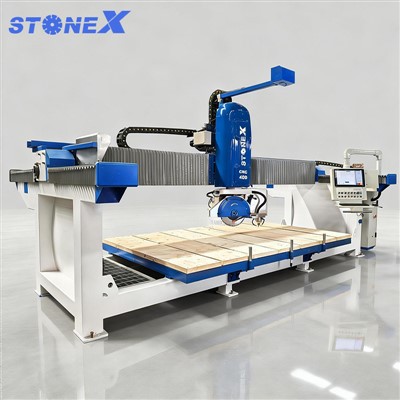
If you’re tired of dealing with parts that wear out too fast, or if you’re planning to upgrade your quarry’s machinery and want to build a reliable parts inventory, I’m here to help. We can walk you through the best wear parts for your equipment, offer custom solutions for your specific rock type, and provide the support you need to keep your operation running smoothly. Don’t let preventable wear parts derail your production—reach out to discuss your needs and find the right parts for your quarry today.
Block Cutting Machine References
- "Quarry Machinery Wear and Tear: A Industry Guide," Mining Engineering, Vol. 72, No. 5, 2020, pp. 45-52.
- K.G. Budinski, Surface Engineering for Wear Resistance, Prentice Hall, 2008, pp. 198-215.
- "Cone Crusher Liner Performance in Abrasive Environments," International Journal of Mining, Reclamation and Environment, Vol. 34, No. 3, 2020, pp. 201-212.
- conveyor belt wear and maintenance guidelines, Industrial Maintenance and Plant Operations Association, 2021, pp. 78-85.
Nantong Huayi Intelligent Equipment Co., Ltd.
Address: Dongsheng Stone Industry Park, Changjiang Town, Rugao City, Jiangsu Province, China
E-mail: claire@hualongm.com
WebSite: https://www.hystonemachinery.com/
