As a carbon steel turned parts supplier, I get it. When a client hits us up with a complex shape turned part, the first thing I don’t do is panic – I start walking through what’s tripping them up (and us, sometimes) because complex carbon steel parts come with a whole set of unique headaches that basic turned parts just don’t have. Let’s break this down, since I’ve spent years troubleshooting these exact issues with guys who turn carbon steel day in and day out. Carbon Steel Turned Parts
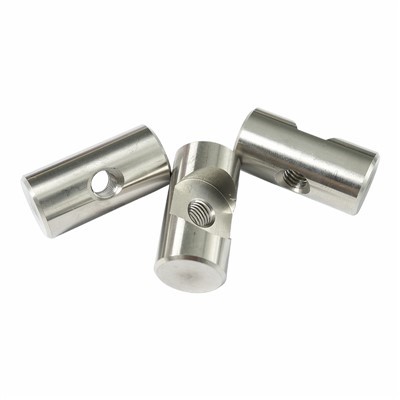
First off, let’s get real about why carbon steel turned parts with complex shapes are so tricky. Carbon steel is a workhorse, sure – cheap, strong, machinable enough for simple stuff – but it has a nasty habit of work hardening when you push too hard, especially when the shape isn’t a simple cylinder or bolt. Add a weird contour, a thin wall that’ll flex mid-cut, or a tight tolerance that’s only a thousandth of an inch off, and suddenly your shop’s standard turning setup goes out the window. I’ve seen a brand-new CNC lathe spit out a perfect simple part, then screw up 10 in a row of a part with an internal undercut because no one adjusted the feed rate. It’s not the machine; it’s not the steel; it’s the small, easy-to-miss details.
Let’s start with the biggest mistake shops make here: not prepping the raw material correctly. A lot of people grab whatever carbon steel bar stock is cheapest, but for complex shapes, that’s a death sentence. We once had a client come to us with a batch of turned parts that kept cracking at a radius – turns out their supplier had given them low-grade hot-rolled steel with inconsistent grain structure. The grain lines ran straight, but the complex shape required a bend in the part, so the steel snapped right at the sharp turn. Now, we always tell clients to go with cold-drawn carbon steel when shapes are complex – it’s had more processing to make the grain uniform, and it’s harder enough to hold shape but still machinable. Also, if your part has any internal features (like a cross-drilled hole that meets an internal step), we always stress stress-relieving the raw bar first. Carbon steel gets internal stress from rolling or cutting the bar to length, and when you start machining complex shapes, that stress releases, warping the part mid-process. I’ve had a part look perfect right after turning, then warp 0.003 inches overnight because we skipped stress relief. Small detail, big difference.
Next up: tooling. Most shops use generic carbide inserts for carbon steel, but for complex shapes, that’s just not going to cut it (pun very intended). When you’re turning a shape that has to move in multiple axes – say, a part with a tapered outer wall and an internal thread that’s a half-inch deep – your tool is going to encounter variable cutting forces. A generic insert will chip, wear out in half the time, and leave a rough surface that makes the next operation (like threading) impossible. We switched to specialized coated carbide inserts a few years back – ones with a titanium carbonitride (TiCN) coating, not the old TiN stuff. TiCN is harder, resists work hardening way better, and the smoother surface reduces friction between the tool and the steel. Also, for internal features (undercuts, small holes), we use solid carbide drills instead of twist drills – twist drills flex, so when you’re drilling a 3/16-inch hole 2 inches deep for a complex part, the drill will wander, making the hole off-center. Solid carbide is stiffer, so it stays on line. Pro tip: don’t cheap out on tooling here. A $10 insert might seem like more money, but it’ll save you from scrapping a $50 raw part that messed up because the insert wore out on the third cut.
Then there’s the machine setup and programming. This is where a lot of small shops mess up because their programmers are used to simple turned parts, not complex ones. Let’s talk about rigidity first. If your part has a thin wall (say, less than 1/8 inch thick) or a long overhang (a protruding tab that’s 2x the diameter of the base), the part will vibrate when the tool hits it. That vibration causes a rough surface, and if it’s bad enough, it can break the tool. We always use a custom fixture for these parts – not a generic 3-jaw chuck that’s made for round stock. For a complex shape, a custom soft jaw that’s machined to fit the part’s outer contour holds it tight without distorting the thin edges. Also, we lower the spindle speed and adjust the feed rate for complex cuts. A simple part might run at 1500 RPM, but a part with a tight radius might only run at 800 RPM. Slow enough to prevent work hardening, fast enough to keep the tool from dragging and leaving a bad finish.
Programming is another big one. Old-school CNC programmers just move the tool in straight lines for simple parts, but complex shapes require smooth, continuous tool paths. If you program a sharp corner with a sudden stop and start, the tool will slam into the steel, cause a vibration, and potentially chip. We use CAM software that generates spline-based tool paths instead of linear moves for all our complex turned parts. Splines make the tool move in a smooth curve, matching the part’s shape, so there’s no sudden force. Also, we add a slight “ramp” to internal cuts – like when you’re making an internal step, you don’t drive the tool straight into the steel at full depth; you ramp it down 0.005 inches at a time. That reduces the cutting force, no more flexing the tool or the part. We had a client last year who was scrapping 25% of their parts because of a stepped internal shape; once we adjusted the tool path to ramp instead of plunge, scrap dropped to under 1%. It’s a tiny adjustment, but it makes all the difference.
Now, what about that thing I mentioned earlier: work hardening. Carbon steel gets harder when you machine it too fast or push the tool too hard, and when you’re dealing with complex shapes, you might be cutting through already hardened steel without even knowing it. The fix here is twofold: first, use that TiCN coated insert I talked about – it resists the heat that causes work hardening. Second, use a proper cutting fluid. A lot of shops use straight water for cutting fluid, but for complex shapes, you need a synthetic or semi-synthetic cutting fluid that’s designed for carbon steel. It cools the tool and the part, lubricates the cut, and flushes away the steel chips so they don’t get caught between the tool and the part, which would cause scratches or work hardening. We once tested a part with a water-based fluid vs. our standard synthetic; the water-based one left a work-hardened layer 0.002 inches thick that we had to machine off, adding an operation. The synthetic fluid? No work hardening, finished in one pass. Simple swap, huge payoff.
Wait, let’s not forget inspection. If you can’t check the part correctly, you’ll never know why it’s messed up until it’s too late. For simple turned parts, a standard vernier caliper works, but for complex shapes, you need coordinate measuring machines (CMMs) or even 3D scanners. We use a portable 3D scanner right on the shop floor – we can scan a finished part and compare it to the CAD file in 10 minutes, instead of taking 30 minutes with a CMM. That means if a tool is wearing out mid-run, we catch it after 5 parts, not 50. We had a batch of parts for a medical device client that needed a 0.0005-inch tolerance on a curved slot; the scanner caught a misalignment in the tool path on the 6th part, so we fixed it before any more were scrapped. Without that quick inspection, they would’ve lost thousands in material and labor.
I know this all sounds like a lot, but it’s just small, consistent steps. As a carbon steel turned parts supplier, we don’t just run parts off a lathe – we troubleshoot every quirk of the complex shape. We’ve dealt with every issue: thin walls that flex, internal undercuts that trap chips, tight tolerances that feel impossible. The key is not to treat complex turned parts like scaled-up simple parts. You can use a 3-jaw chuck for a bolt, but a part with a weird contour needs a custom fixture. You can use a generic insert for a cylinder, but a part with a deep internal thread needs a coated carbide one.
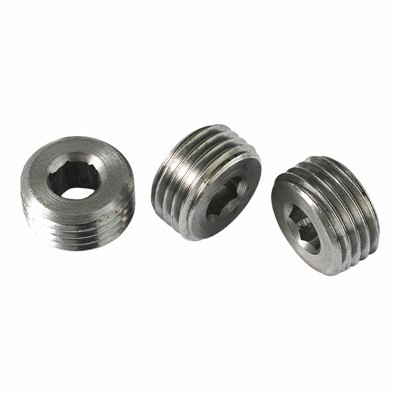
If you’re a design engineer or a procurement person dealing with a project that has complex carbon steel turned parts, don’t try to figure this out on your own. We’ve got the experience, the tooling, and the setup to get it right on the first try. No more scrapped batches, no more waiting weeks for a quote that doesn’t account for the shape’s quirks – we walk through every detail of your part before we even turn a single piece of steel. Hit us up to chat through your specific challenges, and we’ll work with you to make those complex shapes work without the headaches.
Aluminum Turned Parts References:
- DeVries, W. R. (2018). Metal Cutting Principles. Oxford University Press.
- Astakhov, V. P. (2006). Machining of Carbon Steels. CRC Press.
- Smith, G. T. (2020). CNC Programming: Principles and Applications. Industrial Press.
- Kalpakjian, S., & Schmid, S. R. (2019). Manufacturing Processes for Engineering Materials. Pearson.
- Tonshoff, H. K., et al. (1992). Workpiece Material Hardening in Machining. CIRP Annals – Manufacturing Technology, 41(2), 651-663.
Huizhou Quanyi Precision Hardware Products Co., Ltd.
We’re well-known as one of the leading carbon steel turned parts manufacturers and suppliers in China, featured by quality products and good service. Please rest assured to buy customized carbon steel turned parts made in China here from our factory. Contact us for more details.
Address: Building A10, 7th Floor, Zhongchuangyingke 5G Industrial Park, Zhonghan Industrial Park, Tonghu Town, Huizhou City
E-mail: info@qycncturning.com
WebSite: https://www.qycncturning.com/
