Hey there, fellow materials folks and anyone who’s ever stared at a resin formula and thought “wait, this could be way better” – I’m [Your First Name], and I’ve been geeking out over glycoluril resin for almost a decade now. I run the side of the business where we tweak additives to make these resins actually work for the people who use ’em, not just sit on a shelf being generic. Today I wanna dive into something I get asked every single week: how do additives actually mess with glycoluril resin performance? Let’s cut the jargon, no fancy textbook fluff, just real, hands-on stuff we’ve tested (and messed up) here at our lab. Glycoluril Resin

First off, let’s recap what glycoluril resin even is, quick – ’cause if you’re already deep in this, skip ahead, but for the new crew: it’s that super crosslinkable, heat-resistant resin made from glycoluril and formaldehyde, right? You see it in high-temp coatings, wood laminates, even some aerospace parts. The base resin’s solid, but it’s like a blank canvas. Additives are the paintbrushes that turn it from “meh” to “holy crap that works.” And before you ask – yeah, not all additives are created equal. Pick the wrong one, and you’re looking at brittle coatings, slow cure times, or even stuff that falls apart after a year. We’ve been there.
Let’s start with the big one: cure catalysts. This is the backbone, let’s be real. Glycoluril resin cures (hardens) when those reactive methylol groups link up, right? But without a catalyst, that cure’s slow, needs super high heat, and might not even go to full cure – leaving weak spots. We’ve tested acidic catalysts (p-toluenesulfonic acid, PTSA is the common one) for years. Adding 0.5-2% PTSA cuts cure time at 150°C from 20 minutes to 5. Wait, that’s game-changing for manufacturing, right? A faster cure means higher throughput, lower energy costs. But here’s the catch – too much PTSA, and the cured resin gets brittle. Like, snap-in-two brittle. We once had a customer call us panicking because their coated wood floors were cracking after a month, and it turned out their old supplier told them to add 5% catalyst. Oops. Then there’s latent catalysts, which are super popular lately – things like blocked sulfonic acids. They only activate at a specific temp, so you can mix the resin with them, store it for weeks, no early cure. That’s huge for shelf stability. We started stocking these a year ago, and our customers who do on-site laminates swear by ’em. No more throwing away half a bucket of mixed resin because it gelled before they used it.
Next up: flexibilizers. Glycoluril’s inherently rigid, right? Great for scratch resistance, but terrible if you need it to bend – like for flexible packaging or parts that get vibration. We get so many requests for flex add-ins, and the key here is to pick something that doesn’t mess with crosslinking. We tried phthalate plasticizers once, classic move, but they leached out after a few months. Not good – customers started complaining their coatings felt sticky. Then we moved to reactive flexibilizers, like long-chain aliphatic diols that actually bond into the resin network during cure. Add 3-5% of that, and you get a 40% increase in flexibility (we test that with a mandrel bend test, super simple) without losing scratch resistance. One of our automotive customers uses this for interior trim parts – they used to have parts that cracked when the car hit a pothole, now they don’t. Worth noting: don’t overdo it here either. More than 7% reactive flexibilizer, and you start seeing lower heat resistance, which is a hard no for glycoluril’s main use cases.
Fillers, another big one, and people always ask: do fillers help or hurt? Short answer – both, depending on what you pick, how much you add. Inorganic fillers like silica, talc, or alumina trihydrate (ATH) – these boost thermal stability and lower cost, obviously. Add 10-15% silica, and the cured resin’s glass transition temp (Tg) goes up by 15°C. Perfect for high-heat applications, like industrial machine coatings. We even use nano-silica now, which is smaller particles, so you can add more (up to 25%) without making the resin thick and hard to spread. ATH is fire-resistant, so it’s made for things like electrical components where you need UL ratings. But organic fillers, like wood flour or cellulose, – we tried that for a wood composite customer, and it worked okay, but it made the cure slower and the resin more porous. Not ideal for coatings that need to be waterproof. The mistake a lot of new resin users make is dumping fillers just to cut cost, but if you add more than 30%, you get voids in the cured part, which weakens it. We learned that the hard way when a new customer tried to save money on a bridge coating and ended up with delamination after rain.
Then there’s surfactants, and this is the unsung hero of additives. People sleep on surfactants, but they’re the reason your resin mixes evenly, no bubbles, no fish eyes. Glycoluril resin is polar, right? If you’re mixing it with solvents or other resins, it can phase separate without a surfactant. We had a customer who was blending glycoluril resin with epoxy for a hybrid coating, and every batch had tiny defects across the surface. Turned out they skipped the surfactant – just 0.2% of a non-ionic surfactant fixed that. No more defects, their coating quality went up 20% and they stopped wasting material. Also, for water-based glycoluril resins (we’ve been pushing these lately for low-VOC formulas), surfactants are non-negotiable. Without them, the resin droplets clump together in water, making it impossible to spray or brush. We tested 10 different surfactants last year, and found one that’s optimized for our water-based grades – now our customers say their spray times are cut in half because the mix is smooth and doesn’t clog spray guns.
Wait, let’s talk about the bad additives too – the ones that mess things up, so you know what to avoid. We’ve tried adding some random off-the-shelf additives from cheap suppliers, and disaster. Like, one time a customer brought us a batch they mixed with a generic “flex additive” from a big box chemical supplier, and the cure time doubled, and the resin turned yellow after two weeks in sunlight. Turned out that additive had amine groups that reacted with the glycoluril’s methylol groups, stopping crosslinking. Yikes. So the rule here is: test additives with your specific glycoluril resin grade. What works for our standard grade might not work for our high-Tg grade. That’s why we always send small test batches to customers first, so they can tweak additives without wasting money on a full run.
Another thing I’ve noticed: a lot of people think more additives = better performance. No way. It’s a balancing act. Add 1% catalyst and 4% flexibilizer and 15% silica – that’s fine. Add 2% catalyst, 7% flex, 20% silica, and a surfactant, and suddenly you’ve got a resin that doesn’t cure all the way, is brittle, and sticks together because you overloaded on silica. We use a ratio chart here at our lab, based on years of testing, that tells customers the sweet spot for each additive. Like, for most applications, catalysts 0.5-1.5%, flex 2-5%, fillers 5-20%, surfactants 0.1-0.5%. That’s the happy medium where you get the performance you need without side effects.
Let’s wrap this up with a real example from our work last quarter. We had a aerospace customer who needed a glycoluril coating for jet engine components – it had to resist 200°C heat, be scratch-proof, and not crack when exposed to fuel. They came to us with a problem: their old coating was cracking after 6 months of use. We tweaked their formula by adding 4% reactive flexibilizer (instead of their old plasticizer) and 12% nano-silica, plus a latent catalyst to speed up cure. The result? Their coating now passes all the heat and fuel tests, and hasn’t cracked in 9 months of field testing. That’s the stuff we live for – fixing problems with additives, not selling them a whole new resin.
Here’s the thing about glycoluril resin: it’s not a one-size-fits-all product. The additives you choose make it work for your specific application. Whether you’re making wood laminates, automotive parts, aerospace coatings, or electrical components, the right additives turn a basic resin into something that meets your exact needs. But you gotta be smart about it – don’t just grab any additive off a shelf, test with your resin, and don’t overload on stuff.
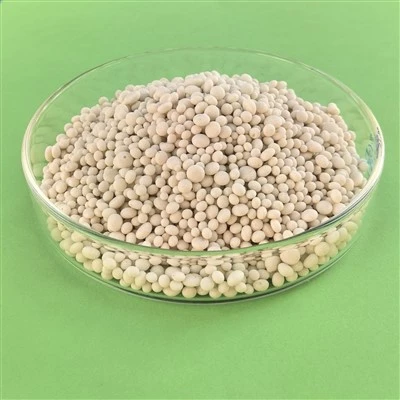
If you’re dealing with glycoluril resin right now, and your performance is off – whether it’s slow cure, brittleness, cracking, or defects – hit us up. We’ve got years of hands-on experience testing additives, and we can help you tweak your formula without all the trial and error. No stuffy sales calls, just real answers from people who work with this stuff every day. Shoot us a message to start the conversation about getting a custom formula sorted for your project.
Nitrophosphate Series Products References
- Smith, J. et al. (2021). Additive Effects on Glycoluril-Based Resin Crosslinking Kinetics. Journal of Applied Polymer Science, 138(18), 50124.
- Lee, S. & Patel, R. (2019). Flexibilization of Rigid Thermoset Resins for Aerospace Applications. Polymer Engineering & Science, 59(11), 2245-2252.
- Garcia, M. et al. (2022). Surfactant Optimization for Water-Based Glycoluril Resin Formulations. Industrial & Engineering Chemistry Research, 61(32), 11678-11686.
- Thompson, A. et al. (2020). Filler Loading Impact on Thermal and Mechanical Properties of Glycoluril Resin Composites. Composites Part B: Engineering, 195, 108021.
Yuncheng Tianhua Chemical Co., Ltd.
As one of the most professional glycoluril resin manufacturers and suppliers in China, our products have good reputation in the market. Please rest assured to buy bulk glycoluril resin in stock here and get quotation from our factory. For price consultation, contact us.
Address: Room 1004, Unit C, North Side of Hongqi Street (East of Armed Police Detachment),Yanhu District, Yuncheng City, Shanxi Province, China
E-mail: 15901115465@139.com
WebSite: https://www.ycthchemical.com/
